Front Loading vs Top Loading Large Kilns
At this capacity, both top loading kilns and front loading kilns can be excellent choices, but they suit different types of work and different workshops.
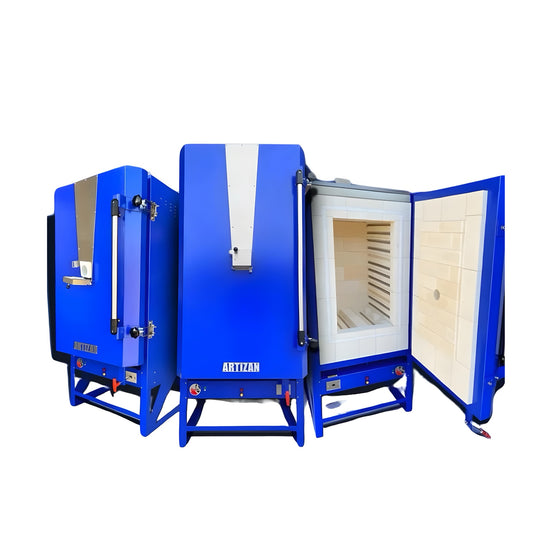
Front loading large kilns open at the front like an oven, allowing you to load at waist height instead of reaching down into a deep chamber. This becomes increasingly important when placing heavy kiln shelves and large ceramic pieces every day, which is why front loading models are often the preferred choice for schools, production potteries and busy studios.
Front loading kilns also make it easier to load tall or awkward work. The trade-offs are a larger footprint, the need for space to open the door fully, and a higher purchase price than a top loading kiln of similar capacity.
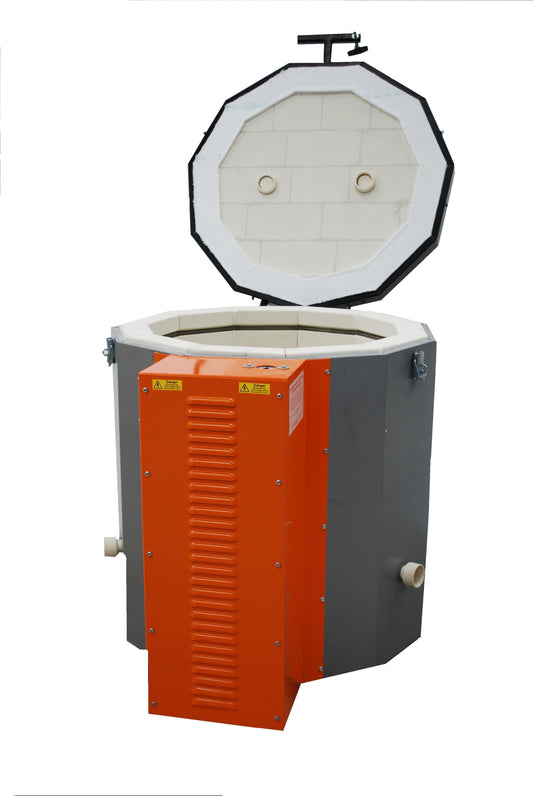
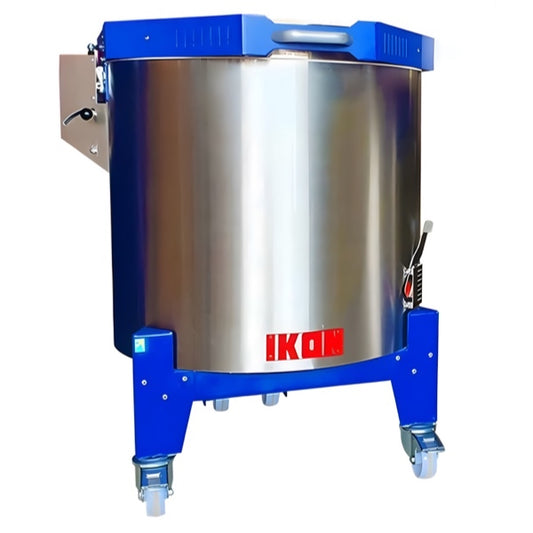
Large top loading kilns load from above. They generally take up less floor space and often cost less for the same firing volume, making them a sensible choice at the lower end of the large kiln range. The main drawback is physical: as kilns become deeper, reaching down to place heavy shelves and larger work becomes more demanding.
In short, if you regularly fire heavy or oversized work, or you're investing in the upper end of the capacity range, a front loading kiln is often worth the extra cost and space. If your budget and workshop space are more limited, a top loading kiln may still be the right choice.
If you're unsure, tell us about the type of work you make and the space you have available, and we'll give you a straightforward recommendation.
Frequently Asked Questions
What is considered a large pottery kiln?
Generally, a large pottery kiln has a chamber capacity of around 80 litres or more, with larger studio and production models running to 500 litres and beyond. At this size, many kilns are hardwired into a dedicated electrical circuit rather than plugged into a standard socket, making them better suited to studios, schools and production potteries than occasional home use.
What size kiln do I need?
It depends on how much you fire and the size of your work. As a rough guide, a 100 litre kiln can fire around 30 to 40 mugs or a typical class set in one load, while studios producing work for sale or teaching classes often benefit from 130 litres or more.
If you're running a smaller kiln several times a week just to keep up with demand, it's usually a sign that a larger kiln would save time and improve efficiency.
Read our How to Choose a Pottery Kiln guide for more information.
Do large pottery kilns require three phase power?
Not always. Many large kilns up to around 150 litres can run from a 32A single phase supply, which many properties can accommodate with the help of a qualified electrician. Larger and more powerful kilns may require three phase power, which is not available in every building.
Always have an electrician confirm your available electrical supply before ordering, as this will determine which models are suitable.
Can a large pottery kiln be installed at home?
Often, yes, provided you have adequate space, a suitable electrical supply and proper ventilation. Many home installations are located in a garage or outbuilding with a non-combustible floor.
The main limitations are available power and ventilation, particularly for larger models. If you're unsure, we can help confirm whether a particular kiln is suitable for your property.
How much space does a large kiln need?
In addition to the kiln's footprint, you should allow space for airflow, maintenance access and any ventilation equipment. Front loading kilns also require enough room for the door to open fully.
It's also worth measuring doorways and access routes before ordering to make sure the kiln can be moved into position safely.
Is a front loading kiln better for larger work?
For heavy or tall pieces, usually yes. Loading at waist height rather than reaching into a deep chamber makes placing larger work easier and reduces physical strain during loading.
For this reason, front loading kilns are commonly found in schools, colleges and production potteries. Top loading kilns remain an excellent choice for lighter work and smaller large-capacity installations.
Are large pottery kilns suitable for schools?
Yes. Larger kilns are often the preferred choice for teaching because they can accommodate a full class set in one firing, reducing the number of firing cycles needed each week.
For schools, reliability, straightforward controls and readily available UK spare parts are particularly important. See our Choosing a Kiln for Schools guide for more information.
What temperature do large kilns reach?
All of the large pottery kilns in this collection are capable of reaching stoneware firing temperatures.
Replacement elements and spare parts are available for every kiln we sell, helping to keep your kiln serviceable for the long term.